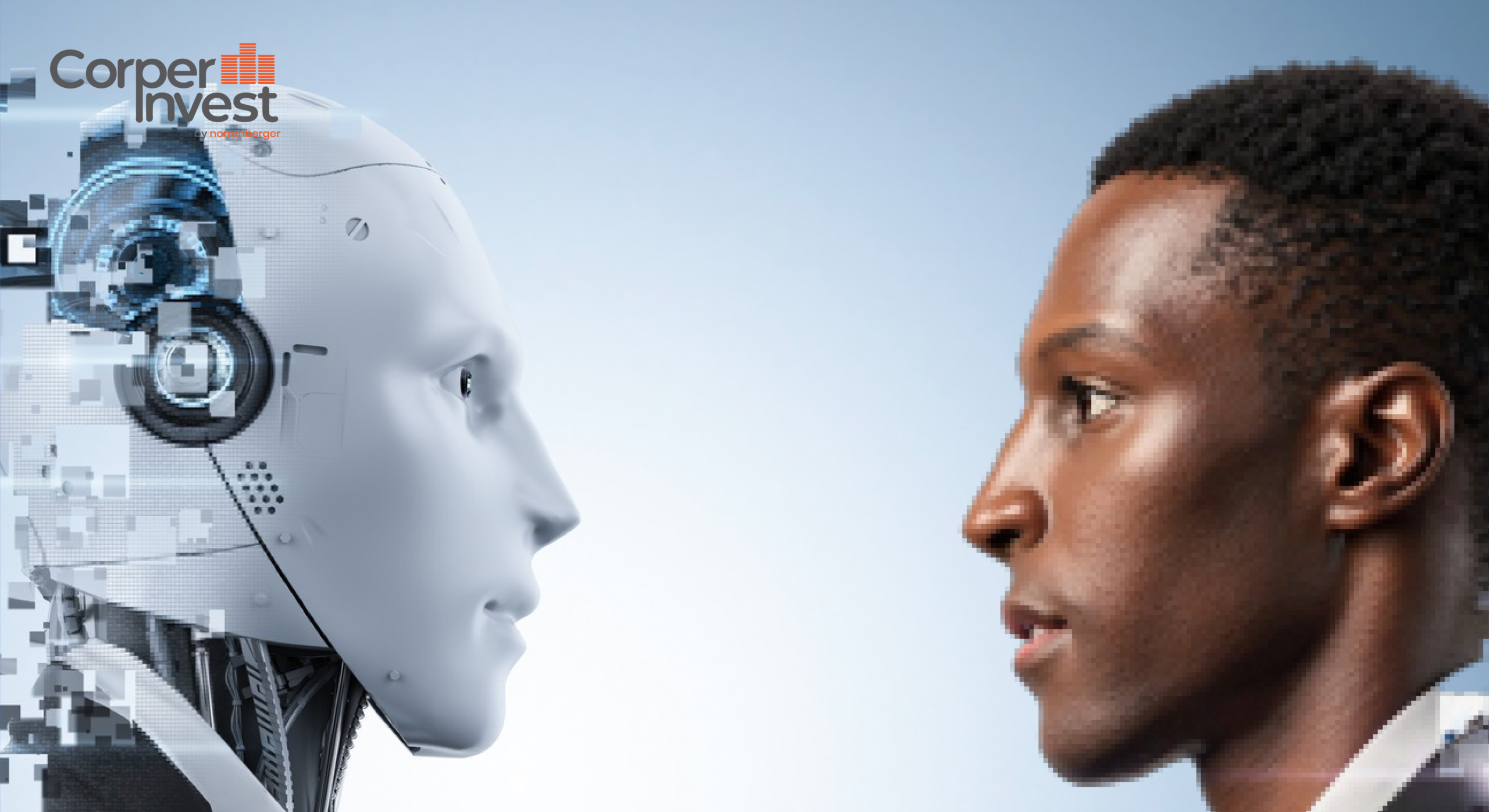
“Will AI take my job?”
It’s a question that’s become increasingly common in classrooms, offices, and online communities. From ChatGPT writing emails to AI tools creating designs, analyzing data, and automating tasks, artificial intelligence is changing the way we work, and fast.
For many young professionals and corps members entering the workforce, the rise of AI can feel intimidating. The big question – is AI really a threat to your career, or could it be one of the greatest opportunities of your generation?
The answer lies in how you choose to respond.
The Reality: AI Is Changing Jobs, Not Ending Careers
Throughout history, technology has transformed industries. The internet changed communication, smartphones changed how we access information. AI is the next major shift.
Certain repetitive and routine tasks are becoming automated. Data entry, basic customer support, scheduling, and simple content generation can now be handled by AI-powered tools. This means some traditional roles may evolve or require fewer people.
However, AI is also creating entirely new opportunities. Companies now need AI specialists, prompt engineers, AI trainers, data analysts, automation experts, and professionals who can effectively combine human creativity with machine intelligence.
The jobs may change, but the need for skilled people remains.
The Biggest Risk Isn’t AI, It’s Standing Still
Many people fear being replaced by AI. In reality, the bigger risk is refusing to adapt.
Employers are increasingly looking for individuals who understand how to use technology to improve productivity. The professional who knows how to leverage AI will often outperform someone who doesn’t.
Think of AI as a calculator. The calculator didn’t eliminate mathematicians; it made them more efficient. Similarly, AI won’t replace ambitious professionals; it will amplify those who know how to use it.
Skills That AI Can’t Easily Replace
Despite its impressive capabilities, AI still struggles to replicate certain human strengths:
- Critical Thinking
AI can provide information, but humans make judgment calls, solve complex problems, and evaluate context.
2. Emotional Intelligence
Leadership, empathy, communication, and relationship-building remain uniquely human advantages.
3. Creativity and Innovation
While AI can generate ideas, breakthrough thinking often comes from human experiences, intuition, and imagination.
4. Adaptability
The ability to learn, unlearn, and relearn will become one of the most valuable career skills in the future.
These are the skills young professionals should continue to develop alongside technical expertise.
How Young Professionals Can Stay Ahead
- Learn AI, Don’t Fear It
Explore tools like ChatGPT, Gemini, Claude, and Microsoft Copilot. Understanding how they work gives you a competitive edge.
- Build Complementary Skills
Combine AI knowledge with skills in communication, project management, marketing, finance, design, coding, or data analysis.
- Focus on Problem-Solving
Companies don’t pay people simply for completing tasks, they pay them for solving problems and creating value.
- Invest in Continuous Learning
The future belongs to lifelong learners. Online courses, webinars, certifications, and industry events can help you stay relevant.
What This Means for Your Financial Future
Career growth and financial growth are closely connected.
As technology reshapes industries, professionals who position themselves ahead of the curve are more likely to access better opportunities, higher earning potential, and stronger financial stability.
That’s why investing in yourself is just as important as investing your money. Every new skill acquired today can create opportunities that pay dividends for years to come.
At Corper Invest, we believe financial empowerment starts with informed decisions; whether you’re investing in your career, your knowledge, or your future wealth.
Final Thoughts
AI is neither a guaranteed threat nor an automatic opportunity; it is a tool.
For those who resist change, it may feel disruptive. For those willing to learn and adapt, it can become a powerful career accelerator.
The question isn’t whether AI will shape the future of work because it already is.
The real question is: Will you use AI to compete, create, and grow, or will you watch others do it first?
The future belongs to those who are prepared for it.
